How to Write a Wedding Speech: Do It Yourself, Use AI, Hire a Writer or Use Wedding Toast
If you're searching for how to write a wedding speech, you probably have a date on the calendar, a microphone in your future and a blank page in front of you. That's a normal place to be. Most people giving a toast have never written one, and the pressure feels oddly high for something that lasts a few minutes.
There are really two questions hiding in that search. One is how to write the speech yourself, and we'll walk through that step by step. The other is whether you should write it at all, or hand the job to a chatbot, a hired writer or a tool built for this. Below you'll find an honest comparison of all four options, including what each one does well, what it costs and how long it takes.
We run Wedding Toast, so we've got a stake in the answer. We'll tell you where we fit and where we don't. If you'd like to see finished speeches first, our <a href="/blog/wedding-toast-examples">wedding toast examples</a> cover samples by role and tone.
In this guide
- How to write a wedding speech in six steps
- Why a template toast falls flat, and what a real one sounds like
- Four ways to write a wedding speech (or have one written)
- Which option should you pick?
- What to write in wedding vows, and how vows differ from a speech
- From draft to delivery: length, practice and nerves
- FAQ

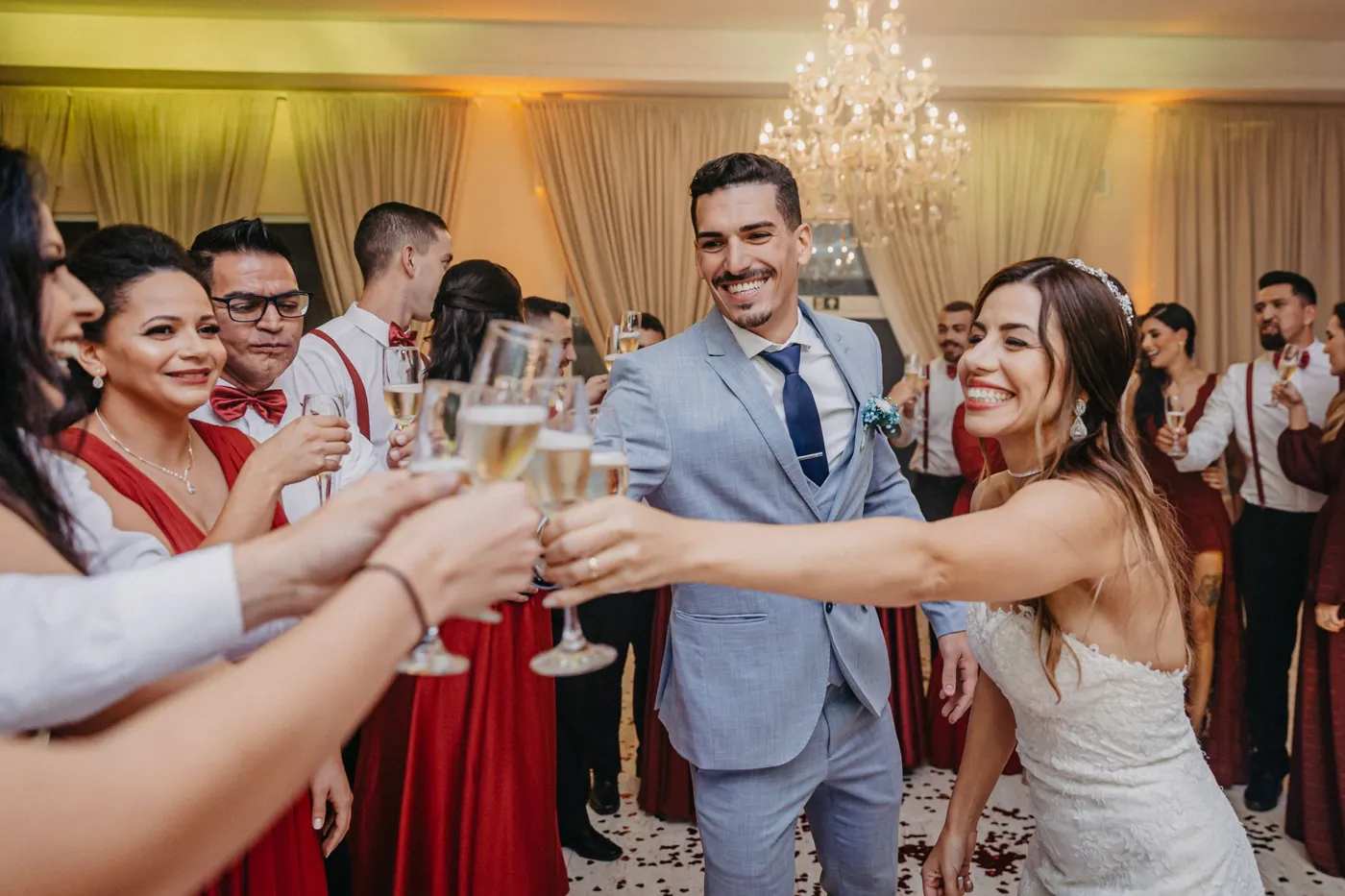
Photo: Matheus Bertelli / Pexels
How to write a wedding speech in six steps
The process is about the same for a best man, a maid of honor, a parent or the couple themselves. Here's the short version.
- Know your slot. Find out when you're speaking, how long you've got and who'll be listening. A toast before dinner for 120 guests is a different job than a few words at a small lunch.
- Collect stories before you write a sentence. Jot down three to five real moments: the first time you met the person, something they did that surprised you, a time they showed up for someone. Names, places and small details matter more than big claims.
- Find what the stories have in common. Maybe the person is stubbornly loyal, or the first one to laugh at themselves. That's your theme, and it keeps the speech from turning into a list.
- Build a simple shape. See the outline below. You don't need anything fancier.
- Write like you talk. Use contractions, short sentences and the words you'd really say. Read each paragraph out loud, and rewrite anything that makes you stumble.
- Cut it to length. Most toasts run two to four minutes. If a story needs a long setup, it probably isn't the right one.
Here's a shape that works almost anywhere:
- Opening: Who you are and how you know the couple, in a sentence or two.
- One story: A real scene with a beginning, a middle and a detail only you'd know.
- The turn: What that story shows about the person, and why their partner is the right match.
- A wish: One line about the life ahead.
- The toast: Ask everyone to raise a glass, then say the names.
That's the whole method. The hard part isn't the structure. It's finding the right stories and getting the first line down, which is where most people get stuck.
Why a template toast falls flat, and what a real one sounds like
Most advice on writing a wedding speech skips the thing that matters most, which is detail. A speech that could be given at any wedding won't land at yours. Here's the same moment written two ways.
The template version:
[Name] is one of the kindest, funniest people I know. From the moment they met [partner], I could tell they were perfect for each other. They bring out the best in one another, and I know they'll be happy for many years to come. Please raise your glasses to the happy couple.
The same moment, from real details:
The week [name] met [partner], I got a voicemail that ran almost four minutes. [Name] had spent the whole drive home from [place] trying to explain how a stranger had corrected their coffee order and been completely right. I still have it saved. I won't play it for you, but I'll tell you what it sounded like: someone who'd just found out the floor was a different shape than they'd thought.
[Partner], you've been correcting [name] ever since, and every single time it's made them better. Everyone, please raise a glass to [name] and [partner].
The first version is fine, and it's forgettable. The second gives the room a scene, a detail only you'd know and a reason the couple works, without a single big adjective. That's what a good toast is made of, and it's also why a generic speech from a blank prompt feels flat.

Photo: https://kaboompics.com/ / Pexels
Four ways to write a wedding speech (or have one written)
Nobody has to face this alone anymore, and each route has real strengths. Here's how the four compare, starting with the one that costs nothing.
Option 1: Write it yourself
Writing it yourself is still the default, and for good reason. You know the stories, you know the people in the room, and the words sound like you because they are you. Guests forgive rough edges when a speech is sincere, and some of the best toasts are a little imperfect. It's also free, and nobody else has to be briefed.
The drawbacks are the blank page and the clock. Many people stall on the opening line, ramble past five minutes or can't tell which of their stories is the strong one. It's also hard to judge your own draft after you've read it forty times.
- Cost: Free.
- Time: A few sittings, longer if you get stuck.
- How personal: As personal as it gets, as long as you finish it.
Option 2: A general AI chatbot like ChatGPT
A chatbot is fast, flexible and often free or cheap. It's good at turning a messy pile of notes into clean paragraphs, switching the tone from funny to sentimental and trimming a draft to length. If you've already written down your stories and you're comfortable giving detailed instructions, it can be a real help.
The catch is the blank prompt. Type "write a wedding toast for my brother" and you'll usually get a polished, generic speech that could belong to anyone, because the chatbot doesn't know to ask about the night he got lost driving to your graduation. A personal result means you already know which details to feed it and how to ask. Plenty of people end up in a long loop of rewrites.
- Cost: Free to low, depending on the plan you use.
- Time: Minutes per draft, but expect several rounds.
- How personal: Only as personal as the details you give it.
Option 3: Hire a professional speech writer
A good professional brings real craft: structure, pacing, jokes that land and the judgment to cut what isn't working. Many offer revisions, and some also coach delivery, which is valuable if public speaking terrifies you. Talking your stories through with another person can also surface details you'd never think to mention.
The tradeoffs are money and time. Dedicated wedding speech writers usually charge about $250 to $1,000 or more per speech, and freelance marketplace writers often charge about $50 to $400. Turnaround is usually one to three weeks, and rush orders cost extra, so it's a poor fit if the wedding is close. You'll also still need to supply the stories.
- Cost: Usually about $250 to $1,000 or more for a dedicated writer, often about $50 to $400 on a freelance marketplace.
- Time: Usually one to three weeks, with extra fees for rush orders.
- How personal: High when you share good material and use the revisions.
Option 4: Wedding Toast
Wedding Toast uses AI to write the speech. No person writes it behind the scenes, and we'd rather say so plainly. What separates it from a general chatbot is that it's built only for wedding speeches. Instead of handing you a blank box, it asks guided questions about the couple, your relationship to them, your stories, the names and the small details, then builds the speech from your answers. That's what makes the result sound like you and not like a template.
The strengths are speed, price and no blank page. You can preview the opening for free before you pay anything, and the full speech is $34 one-time. It's done in minutes. The honest limits: it isn't a human writer, so there's no phone call or delivery coaching, and the speech is only as good as the stories you give it. You'll still want to read it aloud and tweak a word or two so it sits comfortably in your mouth.
- Cost: $34 one-time, with a free preview of the opening.
- Time: Done in minutes.
- How personal: High, because it's built from your own answers about your own stories.
Which option should you pick?
Here's the honest sorting.
- Write it yourself if you enjoy writing, you've got a few weeks and you want every word to be yours.
- Use a chatbot if you already have a draft or detailed notes and mostly need polish, trimming or a change of tone.
- Hire a writer if you've got the budget, the wedding is weeks away and you want a human to talk it through with you, especially if delivery coaching appeals to you.
- Use Wedding Toast if you want a speech built from your own stories without facing a blank page, you'd like to see the opening before you pay and you need it soon.
For most people, we think the last one is the best fit. The usual problem isn't a lack of talent. The stories are in your head, the deadline is close and the first sentence won't come. Guided questions solve that directly. You answer what you'd happily tell a friend over coffee, and the draft arrives already shaped around it. You skip the blank page, you skip the generic output and you skip the wait. And because the opening is free to preview, you can judge whether it sounds like you before spending $34.
Whichever route you take, the stories are what carry the speech. Gather them first, and everything after that gets easier.

Photo: NUDE Nahum / Pexels
What to write in wedding vows, and how vows differ from a speech
Plenty of people searching for how to write a wedding speech are also staring down vows, so it's worth separating the two. Vows are spoken to your partner, usually during the ceremony, and they feel private even with everyone listening. A speech is spoken to the room. Vows are also the one thing we'd tell you to write yourself. They're too personal to outsource, and we don't write them.
How do I write wedding vows?
If you're wondering how to write vows for a wedding, keep it to three parts:
- One specific observation about your partner, something you've actually seen them do.
- Two or three promises that could only be made to them, in plain language.
- A look ahead to the life you're starting, in one line.
That's what to write in wedding vows, whatever your style, and one to two minutes is plenty. For the full method, read our guide on how to write your own vows, or the walkthrough on how to write wedding vows that sound like you.
Where a written speech fits alongside your vows
If you're the bride or groom, there's often a second job after the ceremony: a reception toast thanking guests, honoring your parents and saying something real about your partner in front of everyone. That's a speech, not a vow, and it's the part many people dread because it's long, public and easy to ramble. Write your vows yourself. If you'd like help with the toast, that's where a written-for-you speech earns its keep.
From draft to delivery: length, practice and nerves
Whoever writes it, the speech isn't finished until you've said it out loud.
- Time it. Most toasts run two to four minutes, which is roughly 300 to 500 words at a relaxed pace. Shorter almost always beats longer.
- Read it aloud three times. Change anything that trips your tongue. A sentence that looks good on paper can still sound stiff.
- Cut the risky stuff. Skip inside jokes the room won't get, stories about exes and anything you wouldn't tell the grandparents. One or two light jokes are plenty.
- Print it big or use note cards. Nerves shrink your memory, so don't count on remembering every line.
- Slow down and pause. Let the laugh finish before you continue, and hold your glass until the last line.
A speech that's personal and short, delivered a little slower than feels natural, will beat a clever one that's rushed every time.
Skip the blank page. Get your wedding speech written.
Answer a few guided questions about the couple, your stories and the people in the room, and we'll write a personalized wedding speech in minutes. It's AI built only for wedding speeches, so it asks for the details a generic prompt misses.
Write My Speech → Preview the opening for free · $34 to unlock the full speechFrequently asked questions
You've got the stories. We'll turn them into a speech.
Writing it yourself is a fine choice if you've got the time. If you'd rather not stare at a blank page, tell us about the couple and your stories, and we'll write a personalized speech in minutes. See the opening for free before you decide.
Write My Speech →